Environmental Degradation
The Environmental Crisis
How galamsey — illegal small-scale mining — is devastating Ghana’s forests, rivers, farmlands, and communities.
Understanding the Crisis
What Is Galamsey?
The word galamsey derives from the broken-English phrase “Get am sell” — get it and sell. Originating in the 1970s mining town of Tarkwa, it described informal miners collecting residual gold from processing tailings left by large companies.
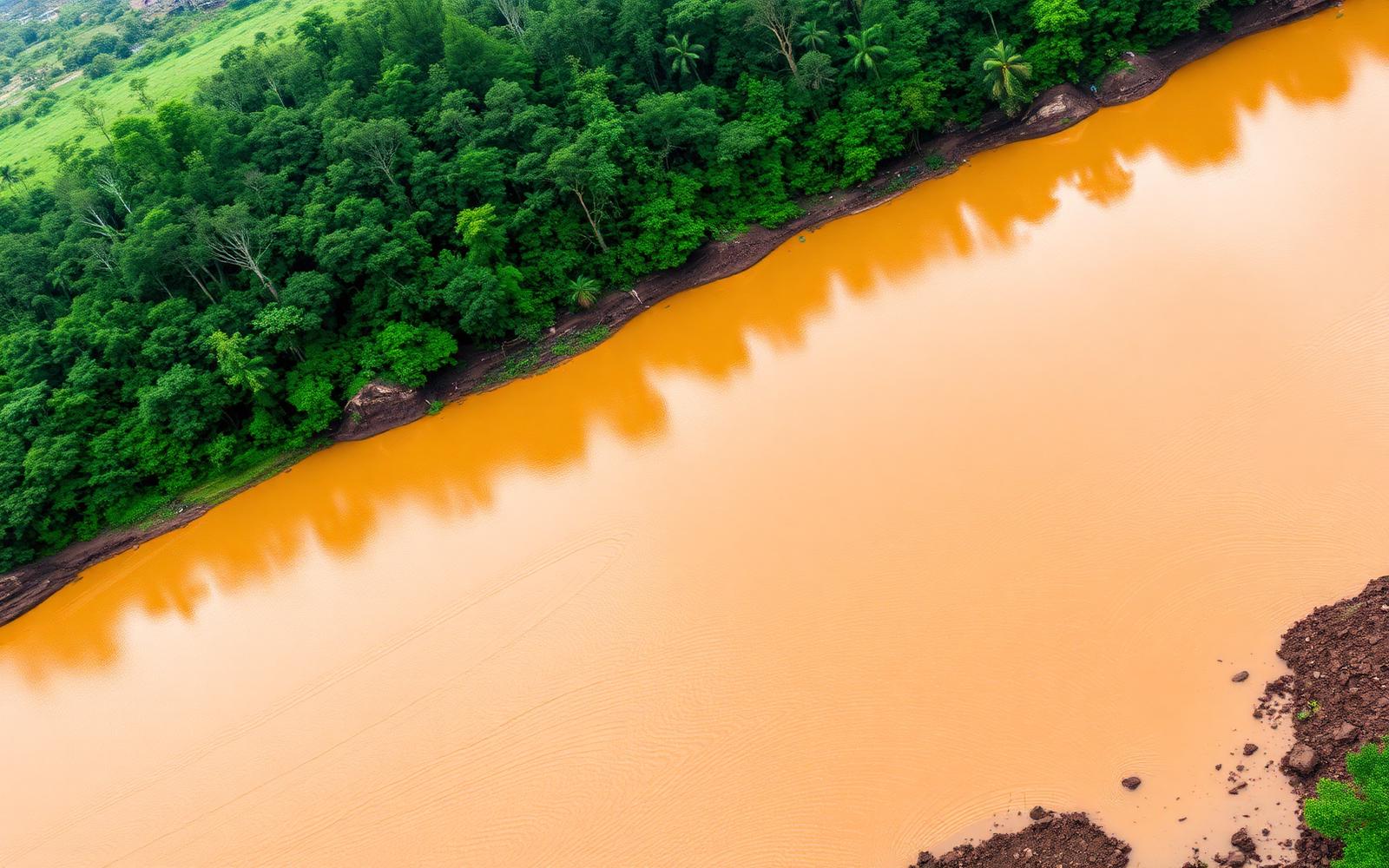
What began as a poverty-driven subsistence activity has evolved into a criminal environmental catastrophe. Large networks of illegal miners — often funded by foreign capital and equipped with industrial machinery — systematically destroy Ghana’s forests, contaminate its rivers, and devastate communities.
“Over 4,500 galamsey sites have been documented across Ghana — each one a scar on the landscape and a threat to communities downstream.”
Scale of the Crisis
Six Dimensions of Harm
The Six Faces of the Crisis
Irresponsible Deforestation
Illegal miners clear vast swaths of forest cover to access gold-bearing soil, destroying critical ecosystems across Ghana’s forest zones.
Land Degradation
Fertile farmlands are converted into barren galamsey sites. Communities lose agricultural productivity as topsoil is permanently stripped away.
River Pollution
Mercury and chemicals contaminate Ghana’s river systems — the Pra, Ankobra, and Offin — destroying aquatic biodiversity and drinking water.
Human Health Impacts
Contaminated water causes widespread illness. Heavy metal poisoning reduces life expectancy in affected communities.
Livestock Health
Animals that consume contaminated water suffer disease and death, devastating rural livelihoods that depend on livestock.
Economic Inequality
Despite short-term income, galamsey entrenches poverty by destroying the natural resource base that rural economies depend upon.
Six Dimensions of Harm
The Six Faces of the Crisis
Irresponsible Deforestation
Illegal miners clear vast swaths of forest cover to access gold-bearing soil, destroying critical ecosystems across Ghana’s forest zones.
Land Degradation
Fertile farmlands are converted into barren galamsey sites. Communities lose agricultural productivity as topsoil is permanently stripped away.
River Pollution
Mercury and chemicals contaminate Ghana’s river systems — the Pra, Ankobra, and Offin — destroying aquatic biodiversity and drinking water.
Human Health Impacts
Contaminated water causes widespread illness. Heavy metal poisoning reduces life expectancy in affected communities.
Livestock Health
Animals that consume contaminated water suffer disease and death, devastating rural livelihoods that depend on livestock.
Economic Inequality
Despite short-term income, galamsey entrenches poverty by destroying the natural resource base that rural economies depend upon.
Water Systems Under Threat
Ghana’s Rivers at Risk
Pra River
One of Ghana’s most polluted rivers; flows through the main gold-mining belt. Mercury levels far exceed WHO safe limits.
Ankobra River
Critical to Western Region communities for water and fishing. Severely contaminated by mercury from upstream galamsey operations.
Offin River
Tributary of the Pra; a lifeline for Central Region communities. Heavy sediment loading destroys aquatic life.
Birim River
Source of drinking water for Eastern Region communities. Faces intense pressure from alluvial gold mining.
Water Systems Under Threat
Ghana’s Rivers at Risk
Pra River
One of Ghana’s most polluted rivers; flows through the main gold-mining belt. Mercury levels far exceed WHO safe limits.
Ankobra River
Critical to Western Region communities for water and fishing. Severely contaminated by mercury from upstream galamsey operations.
Offin River
Tributary of the Pra; a lifeline for Central Region communities. Heavy sediment loading destroys aquatic life.
Birim River
Source of drinking water for Eastern Region communities. Faces intense pressure from alluvial gold mining.